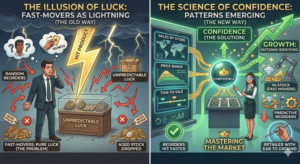
We once worked with a retailer who believed fast-moving products were purely a matter of luck.
Every successful design felt like lightning—unexpected, unpredictable, and impossible to repeat. As a result, buying decisions were reactive, and each new hit was treated as a one-off success rather than something that could be understood and scaled.
But when we looked deeper into their data—analyzing sales across store locations, price bands, and time-to-sale—clear patterns began to emerge.
Certain products consistently performed better in specific stores. Price sensitivity varied across regions. And most importantly, successful designs shared common signals in how quickly they sold after launch.
Once these patterns became visible, the approach changed.
Buying became more confident. Replenishment became faster and more targeted. And ageing inventory began to decline as decisions aligned more closely with actual demand behavior.
The shift was simple but powerful.
Fast movers are not random events.
They are outcomes of patterns waiting to be recognized.
Retailers who learn to listen—to their data, their stores, and their customers—don’t rely on luck.
They make it repeatable.