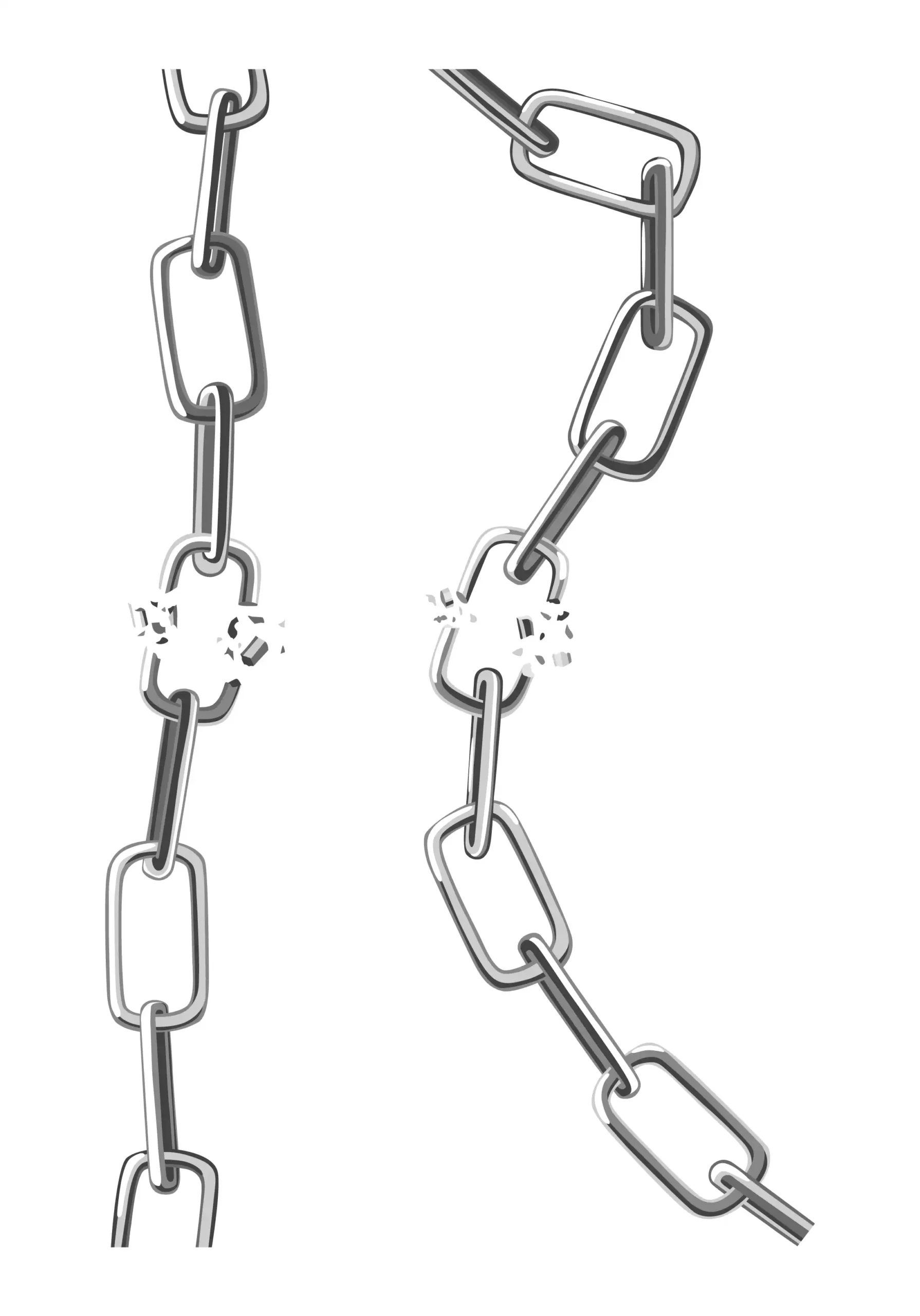
Understanding the concept of a ‘constraint’ is the first step towards understanding the Theory of Constraints (TOC). In this section, we explore this using the example of a chain.
Chain Example:
Imagine a chain designed to hold 30 kg.
But one weak link can handle only 20 kg
So the entire chain’s capacity is limited by its weakest link.
Core Definition
“This weak link is the constraint.”
A constraint is a limitation that prevents a system from achieving its highest possible performance.
TOC reminds us: There are not hundreds of constraints. Just one, or a few.
Types of Constraints
Internal Constraint
The system cannot meet market demand.
Open the bottleneck using the 5 Focusing Steps.
External Constraint
The system can produce more than the market wants.
Increase demand.
The chain’s goal is to lift a load.
The capacity of the whole chain is what matters—not the strength of individual links.
Key Insight
“Just like a chain, a system’s performance is limited by its weakest element. In TOC, we focus not on all parts, but on the one link that matters most.”